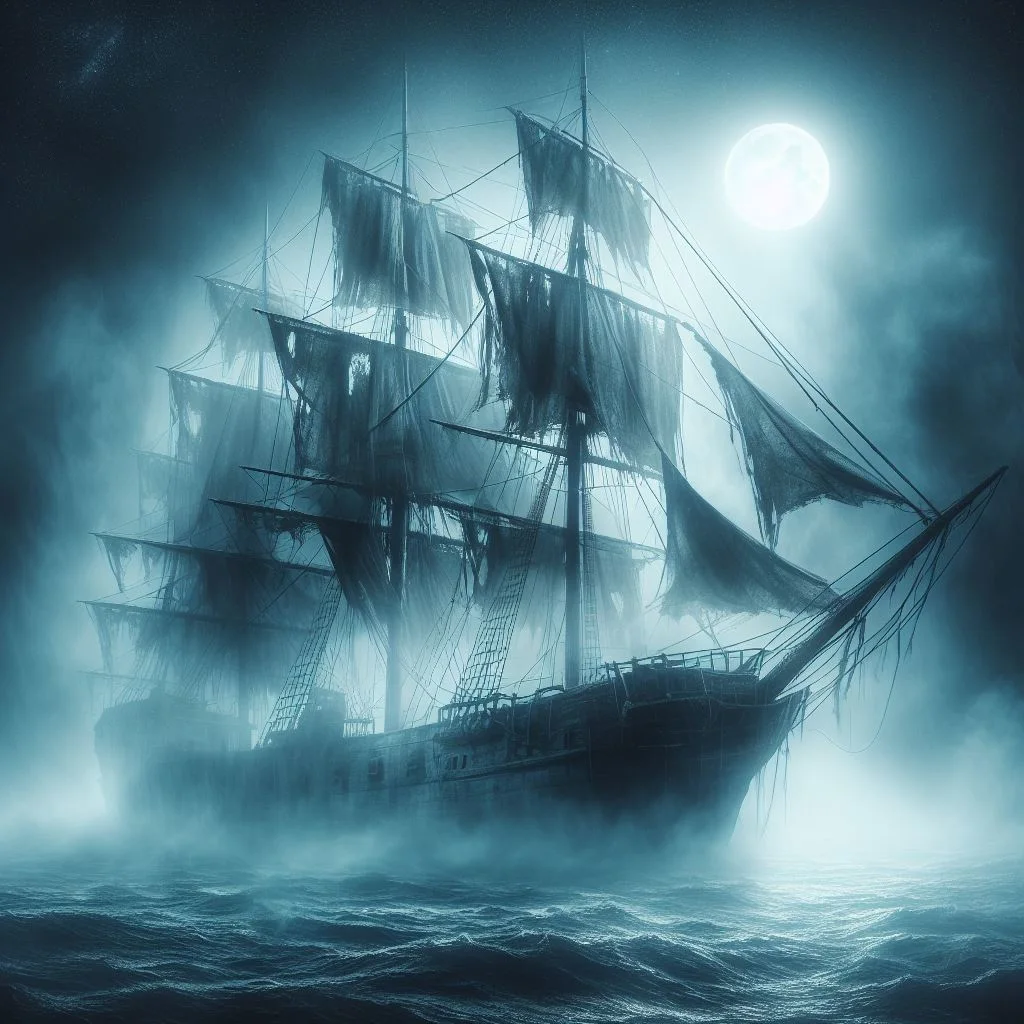
On December 5, 1872, a ship named the Dei Gratia spotted the Mary Celeste floating aimlessly in the Atlantic Ocean. The vessel was fully intact and packed with valuable cargo, but every single person on board had vanished. No bodies were ever found, and no one from the ship was ever heard from again.
The total disappearance of ten people from a safe, working ship remains one of the greatest maritime puzzles in history. The short answer to what happened comes down to sea weather, sea panic, and a fatal decision to leave the ship too soon. But when you look at the raw evidence, the exact reason they jumped remains a deep puzzle.
The Strange Discovery of a Ghost Ship
The Dei Gratia was sailing from New York toward Europe when its captain, David Morehouse, spotted a dark shape on the horizon. It was a brigantine ship sailing in a strange, jerky pattern about 400 miles off the coast of Portugal. Captain Morehouse recognized the vessel as the Mary Celeste. He knew its captain, Benjamin Briggs, to be a skilled and careful sailor.
Morehouse sent his first mate, Oliver Deveau, and a small team over in a rowboat to check on the quiet ship. Deveau climbed onto the deck and called out, but no one answered. The wind whistled through the rigging. The ship was totally abandoned.
The team began a full walk through the vessel to figure out what was wrong. They found three feet of water in the bottom hold, which is not fatal for a ship of that size. The main pump was still working. The ship was fully fit to cross the ocean, yet the people were gone.
Where was the crew? That was the first question Deveau asked. The lifeboat was missing, along with the ship's navigation tools, like the sextant and the marine logbook. Whoever left the ship took those items in a rush, leaving behind their cold-weather clothes, personal pipes, and food supplies.

Who Was on Board the Mary Celeste?
To understand why this mystery matters, you have to look at the people who stepped onto the deck in New York. This was not a rough crew of random sailors. It was a small group of experienced, hard-working people.
Captain Benjamin Briggs was 35 years old and had spent his whole life at sea. He was a devout man who did not drink alcohol, and he was known for being calm under pressure. He was so confident in this voyage that he brought his wife, Sarah, and their two-year-old daughter, Sophia, along with him.
The rest of the crew had seven men. There were four German sailors, a Danish sailor, and an American mate. All of them had clean records and strong work habits. Captain Briggs wrote a letter to his mother right before they sailed, saying the ship was in great shape and his crew was top-notch.
They set sail on November 7, 1872, carrying 1,701 barrels of industrial alcohol bound for Genoa, Italy. Everything seemed normal for the first two weeks of the trip. The last entry in the ship's logbook was dated November 25, ten days before the ship was found. It put them near Santa Maria Island in the Azores. The log reported nothing unusual, just regular wind and mild sea spray.
What the First Responders Actually Found
For over a hundred years, popular stories claimed the Mary Celeste was found with warm meals on the tables and hot tea in cups. Those stories are false. They were made up by fiction writers like Arthur Conan Doyle, who wrote a famous story inspired by the event in 1884.
The actual report from Oliver Deveau paints a much messier, more realistic scene. Here are the exact facts recorded by the crew who boarded the empty ship:
- The ship's papers and main navigation tools were missing from the captain's cabin.
- The beds in the cabin were messy, and one bed showed the imprint of a small child.
- The ship's single lifeboat was gone, along with a heavy rope that had been tied to the back of the vessel.
- All nine barrels of fresh water and six months of food were still intact in the storage rooms.
- The cargo of industrial alcohol was still in the hold, though nine barrels were later found to be empty.
- The windows of the main cabin were covered with wooden boards to keep out water, but one hatch was left open.
Deveau noticed that the ship was taking on some water, but it was not sinking. Two of the main sails were set, while others were torn or missing. It looked as if the crew had left the ship in a sudden, desperate hurry, expecting to return shortly.
Did the Crew Face a Sudden Mutiny?
When the Dei Gratia towed the Mary Celeste into the port of Gibraltar, local authorities immediately suspected foul play. The Attorney General of Gibraltar, Frederick Solly Flood, believed that the crew had murdered Captain Briggs, stolen the alcohol, and fled in the lifeboat.
Flood ordered a deep check of the ship. Investigators found a few dark spots on a sword in the captain's room and some marks on the side of the hull. Flood claimed these marks were cuts made by axes during a bloody fight.
However, scientific tests later proved that the spots on the sword were just old rust, not blood. The marks on the hull were simply wear and tear from normal sea waves and floating wood. The crew's personal items, including money and expensive watches, were still sitting in their drawers. If mutineers or pirates had taken the ship, why leave all the valuables behind?
Besides, Benjamin Briggs was a fair captain, and the crew had no history of violence. There was no sign of a struggle anywhere on the ship. The mutiny theory fell apart under real scrutiny, leaving investigators back at square one.
Could the Alcohol Cargo Have Exploded?
If there was no battle, why would ten people jump into a tiny boat in the middle of the dark ocean? The most solid theory points directly to the dangerous cargo in the hold.
The Mary Celeste was carrying 1,701 barrels of crude alcohol. Nine of those barrels were made of red oak, which is more porous than white oak. Over weeks of ocean travel, alcohol vapor could have leaked out of those nine barrels and filled the tight hold.
If the temperature shifted rapidly, or if a small spark occurred, those vapors could have caused a sudden, loud rumbling sound, followed by a puff of smoke. The hatches might have blown open with a terrifying blast. Captain Briggs would have known that an alcohol fire can kill everyone in seconds without leaving clear fire marks on the wood.
Scared that the ship was about to blow up, Briggs may have given an emergency order. Get off the ship now. The crew scrambled into the small lifeboat, carrying the navigation tools they needed. To stay safe from an explosion while waiting for the danger to pass, they tied the lifeboat to the Mary Celeste with a long, thick rope.
This theory fits many of the physical facts. The nine empty barrels were found near each other. The open hatch makes sense if they were trying to air out fumes. It gives a clear, logical reason for a smart captain to make a fast decision to leave.
How Does a Rope Break a Sailor's Chance of Survival?
If the crew was sitting in a boat tied to the ship, what went wrong next? The ocean is rarely calm near the Azores in winter.
Imagine the small lifeboat floating a hundred feet behind the main ship, held by a single line. Suddenly, a violent sea storm rolls in. The wind picks up fast, pulling the sails of the unmanned Mary Celeste tight. The large ship suddenly surges forward at six or seven knots.
A heavy wooden ship pulling against a light lifeboat in rough water puts immense strain on a single rope. The line could easily snap under the heavy pull, or the knot could slip loose from the deck post. In a matter of seconds, the line breaks.
A rowboat filled with ten people cannot outrun a full-sized ship moving with the wind. The crew would watch in horror as the Mary Celeste sailed away from them, perfectly safe, leaving them stranded in the cold water. A small lifeboat would quickly capsize in open sea waves, swallowing every trace of the passengers.
What Is the Most Likely Answer to the Mystery?
When you strip away the wild myths about sea monsters, alien craft, and ghost stories, you are left with a simple, human tragedy. Here is the step-by-step chain of events that fits every piece of hard evidence we have:
First, leaking alcohol fumes created a panic on November 25, 1872. The captain ordered everyone off the ship to wait out a possible explosion.
Second, the crew grabbed their essential tools, left their heavy clothes behind to move fast, and climbed into the single lifeboat attached by a tow line.
Third, a sudden storm hit the area, snapping the rope and separating the lifeboat from the main ship.
Fourth, the Mary Celeste kept sailing on its own until its sails got tangled, while the small lifeboat sank in deep water miles away.
Is this theory 100 percent proven? No, because we do not have the logbook pages from that final hour, and the ocean keeps its secrets well. But it relies on real sea physics and known human behavior rather than magic.
What Can We Learn from the Ghost Ship?
The Mary Celeste remains a powerful reminder of how fast things can turn sideways on the open sea. Captain Briggs made a choice based on incomplete information and severe fear. He tried to protect his family and crew from a fire, but the sea presented a different danger he did not prepare for.
In life and in mysteries, the simplest explanation is usually the right one. You do not need ghost stories to explain the tragic loss of ten real lives. You just need a bad leak, a moment of deep terror, and a broken rope.
Next time you look at a unsolved historical puzzle, ask yourself this: what simple physical detail might everyone be missing because they are looking for a wild story instead of the truth?